

Tag

Chinese preschool

Browsing

Getting preschoolers comfortable with Chinese takes more than flashcards and forced repetition. For many families, Chinese tuition for preschool serves as a soft launch into structured language learning. It’s less about perfect sentences and more about setting the stage for curiosity, confidence, and communication. A good Chinese preschool programme knows how to turn language into play, and playing into learning.

Listening Without Tuning Out

Before children can speak, they must learn to listen. In Chinese tuition for preschool, a big focus is on tuning ears to Mandarin’s tones, rhythm, and sounds. Young learners hear songs, stories, and conversations spoken at a speed and tone they can process. This builds auditory memory and sharpens attention.

Good listening is about more than hearing words. It’s about picking up on meaning and intent. Activities like storytelling or song-based lessons allow kids to hear how Mandarin is used naturally. Over time, they start to pick up patterns and respond accordingly, turning passive hearing into active understanding.

Speaking With Confidence

Chinese is a tonal language, and tones matter. But expecting preschoolers to hit every tone perfectly from the start is like asking them to recite Shakespeare. What matters more is that they feel safe to speak. Tuition sessions often include role-playing, songs, and short conversations that encourage speech without the fear of being corrected mid-sentence.

At a Chinese preschool, teachers guide pronunciation through fun, not fear. Games that involve call-and-response or songs with repeating lines help children practise without pressure. As their vocabulary grows, so does their willingness to speak up. That confidence is a key step toward fluency.

Recognising Characters

Chinese characters are visual, which means they can actually appeal to children who love drawing or patterns. During tuition sessions, kids are introduced to basic strokes, simple radicals, and common characters through matching games and art activities. They’re not cramming for spelling tests; they’re making visual connections.

The best Chinese preschool programmes know not to overload students. Instead of handing out lists to memorise, they reinforce character recognition through stories, puzzles, and drawing. This turns what might seem like an impossible task into something familiar and even fun.

Building Vocabulary Naturally

Memorising word lists doesn’t work well with preschoolers. What does work is repeating new words in different, meaningful settings. For instance, a unit about food might include reading a picture book, singing a food-related song, and having a pretend meal conversation.

Chinese tuition for preschool uses everyday themes to build word banks. Instead of isolated drills, words appear again and again in stories, activities, and conversations. This repetition, paired with context, helps the vocabulary stick. Kids start using new words not because they’re told to, but because they’ve heard them used in ways that make sense.

ALSO READ: PSLE Chinese Oral Skills: How to Prepare Your Child Effectively

Developing Fine Motor Skills

Chinese writing takes practice, but even preschoolers can start small. Tracing lines, drawing basic strokes, and copying simple characters all help build the hand control needed for writing. These exercises support both language and motor development.

Many Chinese preschool centres turn writing into a tactile activity. Kids might use sand, finger paint, or building blocks shaped like strokes. It’s not neat penmanship they’re chasing, but stroke order awareness and spatial understanding. These skills lay the groundwork for proper writing later on.

Cultivating Patience and Focus

Language learning takes time. So does getting a preschooler to sit still. Chinese tuition blends movement with calm activities to strike a balance. Quiet moments like storytime or tracing exercises are mixed with games and music to keep kids engaged.

This routine builds stamina. Over time, children learn how to focus for longer periods and stick with a task. These skills carry over into other parts of their learning journey and are often noticed when they enter formal schooling.

Building a Positive Attitude Toward Chinese

More than any worksheet or workbook, mindset matters. If a child sees Chinese as a chore, they’ll resist it. If they see it as part of a fun routine, they’ll look forward to it. That’s one of the biggest gains from early tuition.

Chinese tuition for preschool focuses on joy, not perfection. With singing, acting, drawing, and laughing built into each session, kids leave class associating Mandarin with fun, not fear. That attitude sticks and sets the tone for years to come. Contact Tien Hsia to enrol your child in a Chinese preschool programme that builds skills, confidence, and a love for learning.
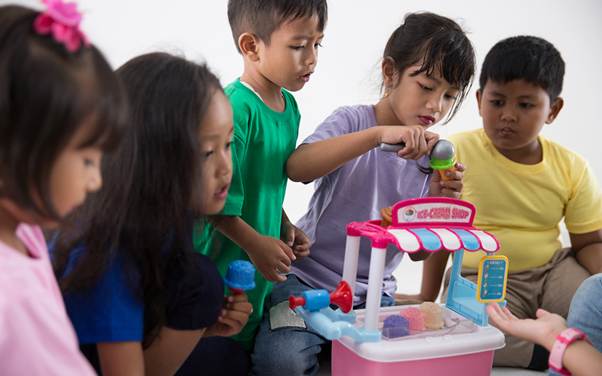
Early childhood education plays a critical role in shaping language abilities and cultural understanding. Parents exploring options in Singapore often compare a Chinese immersion preschool with a traditional playgroup in Singapore. Each offers different approaches, outcomes, and benefits. Understanding these differences helps parents choose the learning environment that supports their child’s development goals most effectively.

1. Language Focus and Curriculum Goals

Chinese immersion preschool centres on Mandarin as the main language of instruction. Teachers speak Mandarin consistently across activities, helping children absorb the language through constant exposure. Vocabulary, sentence patterns, and pronunciation develop naturally during play, storytelling, and structured lessons.

Playgroups in Singapore usually feature English as the medium of instruction. Mandarin lessons appear occasionally, but not enough to establish lasting fluency. Teachers use Mandarin sparingly, limiting children’s chances to develop language confidence. Learning focuses on basic social skills, fine motor development, and general communication rather than deep linguistic growth.

Parents prioritising Mandarin exposure from an early age usually choose a Chinese immersion preschool. The curriculum embeds cultural lessons and vocabulary across daily activities. By attending full Mandarin sessions, children strengthen both receptive and expressive skills consistently.

Playgroups introduce various concepts lightly. Children sing songs or hear stories in Mandarin once or twice a week. However, English remains dominant. This makes a playgroup less suitable for families seeking fluency in Mandarin or deeper cultural grounding.

2. Cultural Integration and Daily Experience

Chinese immersion preschool integrates culture into the daily routine. Teachers lead activities rooted in Chinese customs, from traditional games to festivals and crafts. Children participate in Mandarin rhymes, calligraphy, and holiday stories to connect language with tradition. Exposure builds not just fluency, but familiarity with everyday cultural references.

Playgroup in Singapore includes multicultural content, but lacks structured Mandarin cultural immersion. Activities usually reflect a broad curriculum. Chinese customs appear only during scheduled events such as the Chinese New Year or mid-autumn celebrations. Children experience Mandarin more as an add-on than as an essential learning element.

Cultural integration in Chinese immersion preschool helps reinforce the language. Vocabulary gains depth as it ties to meaningful events. Children begin understanding social and family dynamics in Mandarin-speaking environments. Everyday interactions align with Mandarin usage, supporting retention and fluency.

Playgroups focus more on basic developmental activities. Crafts, music, and free play dominate the routine. Mandarin appears during short segments, with limited opportunities for reinforcement. Teachers use English instructions, so Mandarin takes a secondary role throughout the session.

3. Teacher Proficiency and Instructional Strategy

Teachers in Chinese immersion preschools use Mandarin exclusively or predominantly. Educators hold strong fluency and experience in early childhood Mandarin education. Instructional strategies involve immersive communication, vocabulary repetition, visual aids, and interactive storytelling. Students participate in guided conversations and respond to teacher prompts in Mandarin.

In contrast, teachers in playgroups typically speak English. Mandarin teachers appear occasionally, delivering short lessons with minimal engagement. Children may hear Mandarin songs or follow simple instructions, but sustained dialogue in Mandarin does not occur. The learning strategy favours play-based exploration without focused language objectives.

Educators in Chinese immersion preschool constantly reinforce Mandarin to create familiarity and natural usage. Children absorb grammar, tones, and sentence flow by hearing native or fluent speakers. They start thinking in Mandarin, not just translating from English.

In playgroup settings, children experience fragmented language exposure. Without consistent instruction and reinforcement, learning remains superficial. Mandarin knowledge fades unless supported at home or through additional classes. Teachers often revert to English when children show confusion, breaking immersion and disrupting progress.

4. Parental Expectations and Learning Outcomes

Parents enrolling in Chinese immersion preschool usually expect language acquisition as a clear outcome. Their goal involves developing Mandarin fluency while ensuring the child learns foundational academic and social skills. These parents value cultural grounding, viewing Mandarin as an asset for future education or career paths.

In playgroup settings, parents typically prioritise general development—social interaction, basic communication, and independence. Language exposure matters, but not as a core outcome. They value convenience, flexible schedules, and low-pressure environments that let children explore freely.

Chinese immersion preschool meets expectations for families focused on Mandarin development. Learning outcomes include clear language milestones—recognising Chinese characters, forming basic sentences, and responding naturally in Mandarin. Children become comfortable switching between daily tasks while thinking and expressing in Mandarin.

Playgroup outcomes tend to reflect broad developmental goals. Children build social confidence, follow group instructions, and explore basic concepts. Mandarin development remains minimal unless supported through external means. For families seeking bilingual fluency, traditional playgroups fall short.

Final Thoughts

Choosing between a Chinese immersion preschool and a traditional playgroup in Singapore depends on educational goals. Parents aiming for Mandarin fluency and cultural exposure gain better outcomes from a Chinese immersion setting. The consistent use of Mandarin, cultural integration, and qualified teachers helps children develop deeper language skills early.

Traditional playgroups support overall development but provide limited Mandarin engagement. For parents valuing language as a long-term asset, Chinese immersion offers clearer benefits and a stronger foundation.

Explore how Mandarin playgroups in Singapore fosters language growth early. Visit Orange Tree Preschool today and discover how a Chinese immersion preschool prepares your child for future success.