
Category

Featured

Category

What is the Average Salary After a Hotel Management Course in Delhi?

Nowadays, hotel management has become a popular career option, especially in a vibrant city like Delhi where the tourism and hospitality industries are booming. If you are wondering what is the average salary after completing a hotel management course, it depends on the course level, reputation of the institute and your skills.

Generally, graduates in Delhi start at around INR 2.5 lakh to 5.5 lakh per annum, which can increase to INR 10 lakh or more with experience. Students of reputed institutes like The Hotel School, best hotel management institute in Delhi often get higher packages as their curriculum focuses on practical training and industry exposure, which gives an edge in the job market.

This salary varies across front office, housekeeping, or food & beverage roles – starting from INR 20,000-35,000 monthly at the entry-level, and reaching up to INR 45,000-80,000 at the mid-level. In 2025, these figures are expected to improve further with industry growth, especially with the demand from sustainable tourism and luxury hotels. So, if you are passionate about hospitality, this field offers not only money but exciting experiences too!

How Much Starting Salary Does a Hotel Management Fresher Get in Delhi?

It is thrilling for freshers to enter the world of hotel management in Delhi, but it is important to have realistic expectations when talking about salary. A typical fresher gets a starting salary of INR 15,000 to 25,000 per month, which can be slightly less for diploma holders and more for bachelor’s degree holders.

In a competitive market like Delhi, INR 20,000-35,000 monthly is common for management trainee roles in 5-star chains, especially if you have experience of internships. Fresh graduates from The Hotel School, best hotel management institute in Delhi often get better deals, as their 100% placement assistance and strong industry ties open them positions in top hotels like Taj or ITC, where starting pay can go above INR 25,000.

Looking at the trends for 2025, a 10-15% increase in fresher salary is expected, thanks to tourism recovery and new hotel openings. This is the beginning – with hard work this can quickly double, and perks like free meals or accommodation are add-ons that make life easy.

How Much Career Growth and Promotion Happens After Working in a 5-Star Hotel?

Getting a job in a 5-star hotel is not just about salary but is a golden ticket for rapid career growth. In India, especially in luxury hotels in Delhi, hotel management graduates get promotions within 2-3 years – from entry-level to department manager.

What is the growth? Well, starting as a trainee, you can become an operations manager or even a general manager in 5-7 years, with salary increasing by 20-50% annually and reaching INR 6-15 lakh. Alumni of The Hotel School, best hotel management institute in Delhi often achieve this growth, as their training program lays emphasis on leadership skills and international standards, which unlocks fast-track promotions in 5-star chains.

In 2025, hospitality trends like tech integration and sustainable practices are opening up new roles, like event planners or spa managers, where promotions come with global transfers. This field is dynamic – if you’re dedicated, the sky’s the limit, and job security is also top-notch with 11% industry growth projected.

What is the Salary Package for International Placement in Hotel Management?

It is right to dream of international placements in hotel management as it not only offers adventure but hefty salary packages too. Entry-level packages abroad for Indian graduates start from INR 16-25 lakh per annum, which can go up to INR 33-58 lakh at the mid-level and up to INR 1.2 crore in senior roles in countries like Switzerland, UAE, or the USA.

Hotel managers in Switzerland earn an average of USD 94,000 (about INR 78 lakh) but have to adjust to the cost of living. Institutes like The Hotel School, best hotel management institute in Delhi are strong in international placements; their students get opportunities in luxury chains where packages go up to INR 24.5 lakh, thanks to global partnerships and skill-building programs.

In 2025, post-pandemic recovery is driving demand for cruise ships and resorts, where language skills and certifications are a bonus. These packages double as domestic ones, and perks like visa support or relocation allowances make life luxurious – if you’re ready to explore the world!

With the right training from The Hotel School, best hotel management institute in Delhi, students can achieve not just high-paying jobs but also a successful career in India and abroad.
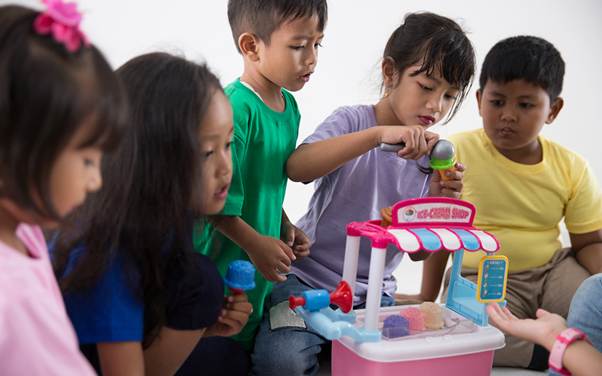
Early childhood education plays a critical role in shaping language abilities and cultural understanding. Parents exploring options in Singapore often compare a Chinese immersion preschool with a traditional playgroup in Singapore. Each offers different approaches, outcomes, and benefits. Understanding these differences helps parents choose the learning environment that supports their child’s development goals most effectively.

1. Language Focus and Curriculum Goals

Chinese immersion preschool centres on Mandarin as the main language of instruction. Teachers speak Mandarin consistently across activities, helping children absorb the language through constant exposure. Vocabulary, sentence patterns, and pronunciation develop naturally during play, storytelling, and structured lessons.

Playgroups in Singapore usually feature English as the medium of instruction. Mandarin lessons appear occasionally, but not enough to establish lasting fluency. Teachers use Mandarin sparingly, limiting children’s chances to develop language confidence. Learning focuses on basic social skills, fine motor development, and general communication rather than deep linguistic growth.

Parents prioritising Mandarin exposure from an early age usually choose a Chinese immersion preschool. The curriculum embeds cultural lessons and vocabulary across daily activities. By attending full Mandarin sessions, children strengthen both receptive and expressive skills consistently.

Playgroups introduce various concepts lightly. Children sing songs or hear stories in Mandarin once or twice a week. However, English remains dominant. This makes a playgroup less suitable for families seeking fluency in Mandarin or deeper cultural grounding.

2. Cultural Integration and Daily Experience

Chinese immersion preschool integrates culture into the daily routine. Teachers lead activities rooted in Chinese customs, from traditional games to festivals and crafts. Children participate in Mandarin rhymes, calligraphy, and holiday stories to connect language with tradition. Exposure builds not just fluency, but familiarity with everyday cultural references.

Playgroup in Singapore includes multicultural content, but lacks structured Mandarin cultural immersion. Activities usually reflect a broad curriculum. Chinese customs appear only during scheduled events such as the Chinese New Year or mid-autumn celebrations. Children experience Mandarin more as an add-on than as an essential learning element.

Cultural integration in Chinese immersion preschool helps reinforce the language. Vocabulary gains depth as it ties to meaningful events. Children begin understanding social and family dynamics in Mandarin-speaking environments. Everyday interactions align with Mandarin usage, supporting retention and fluency.

Playgroups focus more on basic developmental activities. Crafts, music, and free play dominate the routine. Mandarin appears during short segments, with limited opportunities for reinforcement. Teachers use English instructions, so Mandarin takes a secondary role throughout the session.

3. Teacher Proficiency and Instructional Strategy

Teachers in Chinese immersion preschools use Mandarin exclusively or predominantly. Educators hold strong fluency and experience in early childhood Mandarin education. Instructional strategies involve immersive communication, vocabulary repetition, visual aids, and interactive storytelling. Students participate in guided conversations and respond to teacher prompts in Mandarin.

In contrast, teachers in playgroups typically speak English. Mandarin teachers appear occasionally, delivering short lessons with minimal engagement. Children may hear Mandarin songs or follow simple instructions, but sustained dialogue in Mandarin does not occur. The learning strategy favours play-based exploration without focused language objectives.

Educators in Chinese immersion preschool constantly reinforce Mandarin to create familiarity and natural usage. Children absorb grammar, tones, and sentence flow by hearing native or fluent speakers. They start thinking in Mandarin, not just translating from English.

In playgroup settings, children experience fragmented language exposure. Without consistent instruction and reinforcement, learning remains superficial. Mandarin knowledge fades unless supported at home or through additional classes. Teachers often revert to English when children show confusion, breaking immersion and disrupting progress.

4. Parental Expectations and Learning Outcomes

Parents enrolling in Chinese immersion preschool usually expect language acquisition as a clear outcome. Their goal involves developing Mandarin fluency while ensuring the child learns foundational academic and social skills. These parents value cultural grounding, viewing Mandarin as an asset for future education or career paths.

In playgroup settings, parents typically prioritise general development—social interaction, basic communication, and independence. Language exposure matters, but not as a core outcome. They value convenience, flexible schedules, and low-pressure environments that let children explore freely.

Chinese immersion preschool meets expectations for families focused on Mandarin development. Learning outcomes include clear language milestones—recognising Chinese characters, forming basic sentences, and responding naturally in Mandarin. Children become comfortable switching between daily tasks while thinking and expressing in Mandarin.

Playgroup outcomes tend to reflect broad developmental goals. Children build social confidence, follow group instructions, and explore basic concepts. Mandarin development remains minimal unless supported through external means. For families seeking bilingual fluency, traditional playgroups fall short.

Final Thoughts

Choosing between a Chinese immersion preschool and a traditional playgroup in Singapore depends on educational goals. Parents aiming for Mandarin fluency and cultural exposure gain better outcomes from a Chinese immersion setting. The consistent use of Mandarin, cultural integration, and qualified teachers helps children develop deeper language skills early.

Traditional playgroups support overall development but provide limited Mandarin engagement. For parents valuing language as a long-term asset, Chinese immersion offers clearer benefits and a stronger foundation.

Explore how Mandarin playgroups in Singapore fosters language growth early. Visit Orange Tree Preschool today and discover how a Chinese immersion preschool prepares your child for future success.

Educational achievement depends on planning, preparation, and appropriate direction in addition to intelligence. Students have to keep up with changing syllabuses and difficult ideas as academic criteria get ever more demanding. Programs like p5 math tuition offer specific assistance meant to directly handle these academic issues. Offering targeted instruction in line with the most current syllabuses gives pupils a big advantage, turning possible challenges into chances for brilliance.

Personalized Learning For Every Student

Understanding that every student learns differently, focused tutoring programs provide tailored instruction as their first priority. Instead of using a one-size-fits-all strategy, teachers evaluate the pupil’s present knowledge and areas of strength and weakness that call for reinforcement. Lessons then are designed to fit their particular learning style, therefore guaranteeing optimal understanding and retention. Students therefore are more involved, driven, and capable of grasping even the most difficult subjects. Customized attention helps to find early deficiencies in knowledge and take quick care of them. This helps to stop little problems from becoming more serious academic ones. Students who match courses with current syllabuses also keep ahead of classroom instruction, developing confidence and a good basis for future learning. The close direction given in these tutoring sessions promotes analytical thinking, problem-solving, independent study abilities, and a thorough knowledge of disciplines.

Targeted Support For Exam Success

Exam success calls on familiarity with the form, question types, and time management techniques rather than only knowledge of the material. Programs emphasizing focused tutoring shine in getting students ready for these important tests. Exams are simulated by tutors, who also provide practice papers and walk students through successful answering strategies that enhance their marks. For things like p5 math tuition, this focused approach is quite helpful. Students learn the best strategies to approach and solve a broad range of problem types. Regular practice paired with professional feedback helps hone their problem-solving strategies and increase their confidence to answer challenging issues. This thorough preparation guarantees that students show up for the test completely ready to perform at their best.

Staying Updated With Curriculum Changes

New learning objectives and standards are always reflected in the constantly revised educational syllabuses. Staying in line with these developments, focused tutoring programs guarantee that students are continually working with the most current and pertinent content. Teachers constantly change their materials and approaches to fit the most recent curriculum revisions, therefore removing out-of-date knowledge and supporting the most important ideas. Maintaining current helps kids to clearly know their required academic performance. They might give their study top priority, concentrating on subjects more heavily weighted on tests.

Targeted tutoring programs matched with current syllabuses give students a unique academic benefit. Learners who receive individualized attention, exam-specific tactics, and current training are empowered to thrive, therefore acquiring the skills, confidence, and knowledge required for long-term academic success.

Textbooks and lectures are frequently the mainstays of traditional education, which can occasionally make students feel cut off from the practical applications of what they have learned. A welcome change is provided by immersive educational mission projects, such as those inspired by mission.io, that encourage critical thinking and spark curiosity. Children get a deeper comprehension of difficult situations and hone their analytical, evaluative, and creative problem-solving skills through active problem-solving and cooperative cooperation in a mission-driven setting. These activities foster a deeper and more enduring influence on their cognitive growth than rote memorizing.

Sharpening Problem-Solving Skills through Real-World Challenges

By their very nature, mission initiatives can pose complex issues that call for creative fixes. Participants are forced to consider the issue from multiple perspectives, whether they are developing educational materials for impoverished children or inventing a sustainable water filtration system for a community without access to clean water. They gain the ability to pinpoint the underlying reasons, think through potential roadblocks, and generate creative solutions. Students refine their problem-solving skills through this iterative process of trial and error, growing resilient and adaptable as they deal with unforeseen obstacles.

Cultivating Decision-Making Abilities through Collaborative Projects

Effective mission initiatives necessitate teamwork, with each member offering their special talents and viewpoints to accomplish a shared objective. Students gain the ability to assess many points of view, balance the advantages and disadvantages of alternative possibilities, and make well-informed judgments that advance the project as a whole as they collaborate. This cooperative setting encourages people to express their opinions and defend them, as well as to engage in constructive debate and open communication. Children gain decision-making skills through this process, learning to weigh moral considerations and put the interests of the community they serve first.

Fostering Empathy and Ethical Reasoning through Service

Mission projects develop ethical reasoning and empathy in addition to cognitive abilities. Students get a deeper grasp of the social, economic, and environmental variables that contribute to real-world difficulties by working closely with communities that are dealing with them. They develop empathy and are inspired to think about the moral ramifications of their behaviour as a result of this first-hand experience. They gain a strong sense of social responsibility and a dedication to changing the world by learning to think critically about justice, fairness, and sustainability.

Long-Term Impact: Empowering Future Change makers

Practical educational mission programs teach children values and skills that last. These initiatives teach students critical thinking, problem-solving, decision-making, empathy, and ethical reasoning to become active citizens. They learn to take on challenging tasks, value lifelong learning, and work for social justice. These experiences prepare pupils for school and employment and offer them the skills and mind-set to become change agents who will make society more egalitarian and sustainable.

To perform work at height safely requires more than just courage or balance—it demands a sophisticated understanding of both ancient physical laws and modern safety protocols that have evolved through thousands of years of human trial, error, and occasional tragedy. From the earliest human builders who scaled primitive scaffolding to construct monuments to today’s industrial climbers maintaining telecommunications towers, our relationship with elevation has consistently presented one of our species’ most persistent occupational challenges.

The Evolutionary Mismatch

Humans evolved as ground-dwelling primates, not particularly adapted for life in the canopy or on cliff faces. Unlike our arboreal cousins, we lack the physical specialisations that make elevated work instinctive. Our bipedal posture, designed for efficient walking on flat surfaces, becomes a liability when operating on narrow platforms or unstable surfaces.

This evolutionary mismatch creates a fundamental paradox:

  • Our cognitive abilities allow us to envision and construct increasingly taller structures
  • Our physical form remains optimised for terrestrial locomotion
  • Our instinctual fear of falling serves as an imperfect safety mechanism
  • Our technological innovation provides tools to overcome our biological limitations

“The most common misconception is that experienced workers no longer fear height,” notes a Singapore performance work at height instructor. “In reality, the most effective professionals maintain a healthy respect for elevation while developing systematic approaches to manage risk.”

The Statistical Inevitability

The Mathematics of Gravity

From a purely physical perspective, falls present straightforward calculations. An object—human or otherwise—accelerates at approximately 9.8 meters per second squared. This mathematical certainty creates predictable outcomes:

  • A fall from 3 meters reaches impact velocity within 0.78 seconds
  • A fall from 10 meters allows only 1.4 seconds before impact
  • The human reaction time (approximately 0.2 seconds) consumes critical response windows
  • These physical constants remain unchanged regardless of worker experience or confidence

The statistics reveal an uncomfortable truth: in elevated environments, probability works against us. Over sufficient time, even small probabilities of failure approach certainty—a principle that explains why height-related incidents persist despite advances in safety equipment.

“When we analyse incident data, we consistently find that complacency, not equipment failure, creates the greatest risk factor,” explains a Singapore work at height regulator. “Safety systems work remarkably well when properly implemented, but they cannot overcome human psychological tendencies toward normalisation of risk.”

The Technological Evolution

From Rope to Engineered Systems

The history of height safety mirrors broader patterns of human technological development—a progression from simple tools to complex, redundant systems:

  • Ancient civilisations relied primarily on rope and wooden scaffolding with minimal fall protection
  • Industrial-era height work introduced primitive harnesses, but the accepted casualty rates are unthinkable today
  • Mid-20th-century approaches began incorporating engineered anchor points and energy-absorbing components
  • Modern systems deploy comprehensive protection, incorporating behavioural psychology and ergonomic design

This evolution reflects more than mere technological improvement—it represents a fundamental cognitive shift in how we conceptualise risk, moving from fatalistic acceptance toward systematic management.

The Cognitive Framework

Beyond Equipment: The Mental Models

Physical equipment provides only one dimension of height safety. Equally crucial are the mental frameworks that govern decision-making in elevated environments:

  • Systematic pre-task risk assessment processes
  • Continuous situational awareness practices
  • Clear communication protocols specific to elevated work
  • Emergency response planning that accounts for psychological responses under stress

“The most sophisticated safety systems incorporate an understanding of human cognitive biases,” observes a Singapore-based work at height specialist. “We design protocols not for ideal human performance but for realistic human behaviour under pressure.”

The Regulatory Landscape

From Individual Choice to Collective Standards

Perhaps the most significant transformation in height safety has been the shift from individual responsibility to collective standardisation. Modern regulation represents a form of codified wisdom—the accumulated lessons from countless incidents distilled into mandatory practices:

  • Certification requirements that verify minimum competency
  • Equipment standards that ensure consistent performance
  • Inspection protocols that maintain system integrity
  • Documentation requirements that create accountability

This transition mirrors broader societal patterns, where individual risks increasingly become subject to collective governance as interdependencies grow more complex.

The Implementation Gap

Knowledge vs. Practice

Despite sophisticated equipment and comprehensive regulations, incidents continue to occur, not primarily due to knowledge deficits but because of implementation failures:

  • Time pressure that encourages procedural shortcuts
  • Commercial incentives that create conflicts between safety and efficiency
  • Cognitive biases that distort risk perception
  • Organisational cultures that implicitly reward risk-taking

“The gap between knowing and doing remains our greatest challenge,” notes a Singapore performer who works as a height trainer. “Most workers involved in incidents could accurately describe the proper procedures they should have followed.”

The Future Integration

Technological Convergence

Emerging technologies promise to reshape height safety through unprecedented integration:

  • Wearable sensors that detect near-miss events and fatigue indicators
  • Augmented reality systems providing real-time hazard identification
  • Predictive analytics identifies patterns preceding incidents
  • Autonomous monitoring systems create objective safety verification

These developments suggest a future where safety systems shift from passive barriers to active participants in risk management.

The Philosophical Dimension

At its core, height safety represents more than practical risk management—it reflects humanity’s broader relationship with natural forces. Our ability to work safely at elevation symbolises our species’ defining characteristic: using accumulated knowledge to overcome biological limitations.

The evolution from primitive scaffolding to comprehensive safety systems parallels our broader intellectual journey—from superstitious explanations of falling bodies to precise mathematical understanding of gravitational forces and human biomechanics.

For those who regularly navigate elevated environments, this intellectual framework transforms abstract principles into lifesaving practices. In few other contexts does theoretical knowledge so directly translate to physical survival.

As we continue building ever-taller structures and maintaining increasingly complex elevated infrastructure, our collective approach to gravity management will remain critical. The organisations that thrive will be those that recognise height safety not as a regulatory burden but as a sophisticated discipline merging physical science, behavioural psychology, and systems thinking—a discipline essential for anyone who must perform work at height.

Graduate school brings a heavy workload of complex writing assignments that sometimes feel overwhelming. Finding reliable support for academic writing is a priority for many students juggling multiple responsibilities. Let’s explore some valuable resources that cater specifically to the advanced writing needs of graduate students.

Academic writing challenges for graduate students

Graduate-level writing demands more sophisticated analysis, profound research, and vigorous argumentation than undergraduate work. Thesis statements must be more nuanced, sources more scholarly and critical thinking more evident throughout. Many graduate students struggle with these elevated expectations while balancing teaching assistantships, research projects, and personal commitments.

The pressure to produce publication-quality work can leave even talented writers seeking assistance. This is especially true for international students adapting to new academic conventions or professionals returning to academia after years in the workforce. Finding appropriate support becomes essential for academic success.

 Quality resources for graduate writing support

University writing centres offer specialized consultations tailored to graduate-level writing concerns. These centres typically provide one-on-one sessions with experienced graduate writing consultants who understand discipline-specific expectations. Many now offer in-person and virtual appointments, making them accessible regardless of your schedule or location.

Online workshops focusing on specific aspects of graduate writing provide targeted help for everyday challenges. From crafting literature reviews to structuring methodology sections, these resources break down complex writing tasks into manageable components. Look for offerings from academic libraries, professional associations in your field, and dedicated academic writing websites.

Navigating the possibilities

What can I write my college essay about? This question often paralyzes graduate students at the start of a project. The best topics typically emerge from genuine intellectual curiosity combined with gaps in existing research. Begin by reviewing recent scholarly conversations in journals related to your field. Look for contradictions, unanswered questions, or areas where you disagree with current approaches.

Your personal experiences can also inform meaningful academic writing. The professional background gives you a unique insight into practical applications of theoretical concepts. Or maybe your cultural perspective illuminates blind spots in dominant research paradigms. The intersection of your unique perspective and academic discourse often yields the most compelling graduate-level essays.

Developing sustainable writing practices

what can i write my college essay aboutbecomes less daunting when you establish consistent writing habits. Set realistic daily writing goals rather than attempting marathon sessions before deadlines. Even 30 minutes of focused writing each day accumulates significantly over a semester.

Create accountability structures to maintain momentum. Writing groups, where members share goals and report progress, can provide motivation and valuable feedback. Some graduate students find that scheduling regular meetings with a writing consultant helps them stay on track with larger projects.

Technology tools for graduate writers

Several digital tools can streamline the writing process for graduate students:

  • Reference management software organizes research materials and automatically formats citations
  • Text analysis programs help identify patterns in your writing style
  • Grammar and style checkers catch mechanical errors
  • Project management applications break large writing tasks into manageable components

Using these tools effectively reduces the administrative aspects of writing, allowing more time for higher-order thinking. Developing a growth mindset toward writing and seeing challenges as opportunities to improve rather than evidence of inadequacy transforms the writing process from a source of stress to a tool for intellectual development. By building a toolkit of resources and strategies, you’ll navigate graduate writing challenges with increasing confidence and skill.

Water is a fascinating and essential element of life, making it an ideal topic for STEM (Science, Technology, Engineering, and Mathematics) education. With a few simple, everyday materials, you can create engaging and interactive projects to help kids explore the properties, movement, and role of water in nature. Here are some free STEM projects that promote curiosity and learning about water. About the free stem activities for elementary here are details for you.

Exploring Water Density and Buoyancy

Materials needed: food coloring, containers filled with water, household objects (stones, coins, corks, etc.)

In this project, kids can investigate how water density and buoyancy interact. By adding food coloring to water, they can observe how objects behave when submerged. By collecting various household items, they can predict which objects will float or sink and then test their predictions. This project helps them to understand Archimedes’ Principle and density concepts.

Building a Simple Water Filter

Materials needed: coffee filter, sand, gravel, small container, water

Teach kids about water filtration with this hands-on project. A simple water filter can be built using a coffee filter, sand, and gravel. By layering the materials in a small container, kids can observe how water passes through each layer, eventually becoming cleaner. This project provides an excellent opportunity to discuss the importance of clean water and water conservation.

Visualizing Water Movement with Capillary Action

Materials needed: colored water, paper towels, clear cups

Capillary action is a fascinating water property that can be easily demonstrated using everyday materials. By placing a folded paper towel between two clear cups, one containing colored water, kids can watch as the water is drawn up the towel into the empty cup. This project provides a visual representation of the natural water transportation process in plants.

Designing a Rain Gauge

Materials needed: plastic bottle, ruler, scissors, a marker, waterproof tape

This project allows kids to explore real-life applications of math and science. By modifying a plastic bottle, they can create a functional rain gauge. By marking intervals on the bottle with a ruler and a marker, kids can measure the amount of rainfall and track weather patterns. This project also offers the opportunity to discuss climate change and its impact on weather patterns.

Constructing a Rube Goldberg Machine with Water

Materials needed: various items such as dominos, marbles, funnels, tubes, water source

Rube Goldberg machines are complex contraptions designed to accomplish simple tasks in a roundabout way. Using water as a primary element, kids can build a machine that showcases the properties of water, such as flow, gravity, and buoyancy. This project encourages creativity, problem-solving skills, and teamwork while demonstrating basic physics concepts.

These free STEM projects not only teach kids about the wonders of water but also promote critical thinking, collaboration, and communication skills. Kids will have a great time learning, and they will develop a deeper understanding of the natural world.