
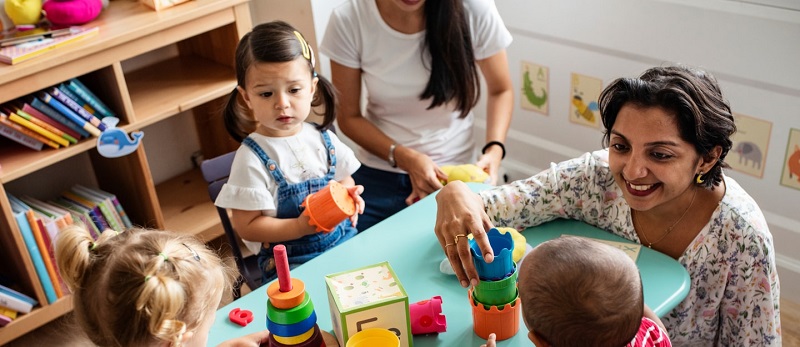
In the realm of early childhood education, the terms “Nursery 1” and “Nursery 2” often come up, particularly in Singapore and other countries with similar education systems. These crucial stages form the foundation of a child’s formal learning journey, setting the stage for future academic and personal development. This comprehensive guide delves into the world of Nursery 1 and Nursery 2, exploring what they entail, their differences, key information for parents, and how to select the best school for your child’s early education.
Understanding Nursery 1 and Nursery 2
Nursery 1 and Nursery 2 are early childhood education levels typically designed for children aged 2 to 4 years old. These stages precede formal schooling and are part of the preschool education system. Let’s break down each level:
Nursery 1
Age Group:
Generally for children aged 2 to 3 years
Focus:
Introduction to structured learning environments
Key Objectives:
Basic socialization, language development, and motor skills
Nursery 2
Age Group:
Usually for children aged 3 to 4 years
Focus:
More structured learning with academic foundations
Key Objectives:
Enhanced social skills, pre-literacy, and pre-numeracy concepts
Both Nursery 1 and Nursery 2 play crucial roles in a child’s early development, providing a bridge between home care and formal education.
Key Differences Between Nursery 1 and Nursery 2
While both stages are part of early childhood education, there are significant differences in curriculum, teaching approaches, and developmental expectations:
1. Curriculum Complexity
Nursery 1: Focus on basic concepts, simple activities, and routines
Nursery 2: Introduction of more complex ideas, structured activities, and early academic concepts
2. Social Development
Nursery 1: Emphasis on basic social skills like sharing and turn-taking
Nursery 2: More advanced social interactions, cooperative play, and group activities
3. Language Development
Nursery 1: Building vocabulary, simple sentence structures
Nursery 2: Expanded vocabulary, more complex language use, early reading skills
4. Motor Skills
Nursery 1: Focus on gross motor skills and basic fine motor activities
Nursery 2: More refined fine motor skills, introduction to writing and drawing
5. Cognitive Development
Nursery 1: Basic problem-solving, shape recognition, and sorting
Nursery 2: More advanced problem-solving, early math concepts, and logical thinking
6. Independence
Nursery 1: Developing basic self-help skills
Nursery 2: Greater emphasis on independence in daily tasks and learning
7. Creative Expression
Nursery 1: Free exploration of art materials and music
Nursery 2: More structured art projects and musical activities
8. Attention Span
Nursery 1: Shorter, more frequent activity changes
Nursery 2: Longer periods of focused activities
Essential Information About Nursery 1 and Nursery 2
Parents considering or preparing for their child’s entry into Nursery 1 or Nursery 2 should be aware of several key points:
1. Developmental Appropriateness
Both stages are designed to meet the developmental needs of specific age groups
Activities and expectations are tailored to children’s cognitive, social, and physical abilities
2. Play-Based Learning
Both Nursery 1 and 2 typically employ play-based learning approaches
Play is used as a vehicle for introducing concepts and developing skills
3. Holistic Development
Focus is not solely on academic skills but on overall child development
Emotional, social, physical, and cognitive aspects are all addressed
4. Preparation for Formal Schooling
Nursery 2, in particular, begins to prepare children for the transition to formal education
Introduction of routines, structured learning times, and basic academic concepts
5. Individualized Approach
Recognition that children develop at different rates
Personalized attention to meet individual needs and learning styles
6. Parental Involvement
Both stages often encourage significant parental involvement
Regular communication between teachers and parents is typical
7. Assessment Methods
Focus on observational assessment rather than formal testing
Regular progress reports and parent-teacher conferences
8. Multilingual Exposure
In many settings, particularly in Singapore, children may be exposed to multiple languages
Bilingual or multilingual programs are common
9. Technology Integration
Increasing use of age-appropriate technology in learning activities
Balance between digital and traditional learning methods
10. Health and Safety Protocols
Strict health and safety measures, especially important in early childhood settings
Regular health checks and cleanliness standards
Selecting the Best School for Nursery 1 and Nursery 2
Choosing the right school for your child’s Nursery 1 and Nursery 2 education is a crucial decision. Here are key factors to consider:
1. Educational Philosophy
Research the school’s teaching approach (e.g., Montessori, Reggio Emilia, play-based)
Ensure alignment with your family’s values and your child’s learning style
2. Curriculum
Examine the curriculum for age-appropriateness and comprehensiveness
Look for a balance between academic foundations and holistic development
3. Teacher Qualifications
Inquire about teachers’ qualifications and experience in early childhood education
Consider the teacher-to-student ratio
4. Learning Environment
Visit the school to assess the physical environment
Look for clean, safe, and stimulating classrooms and play areas
5. Reputation and Accreditation
Check the school’s reputation through parent reviews and community feedback
Verify accreditation and licensing by relevant educational authorities
6. Location and Schedule
Consider the school’s proximity to your home or workplace
Evaluate if the school’s hours align with your family’s schedule
7. Language of Instruction
Decide on the preferred language(s) of instruction
For bilingual programs, understand the balance between languages
8. Extracurricular Activities
Look for schools offering a range of extracurricular activities
Consider how these activities support overall development
9. Parental Involvement Opportunities
Understand how the school involves parents in their child’s education
Look for regular communication channels and parent-teacher interactions
10. Transition Support
Inquire about how the school supports transitions between Nursery 1 and 2
Consider the school’s approach to preparing children for formal schooling
Conclusion: Laying the Foundation for Lifelong Learning
Nursery 1 and Nursery 2 represent crucial stages in a child’s early education journey. These formative years set the stage for future learning, social development, and overall growth. By understanding the unique aspects of each stage and carefully selecting the right educational environment, parents can provide their children with a strong foundation for lifelong learning.
Remember that each child is unique, and what works best for one may not be ideal for another. Take the time to observe your child, consider their individual needs and personality, and use this information to guide your decision-making process. Whether you choose a traditional preschool, a Montessori environment, or another educational approach, the key is to find a nurturing, stimulating setting that encourages your child’s natural curiosity and love for learning.
Ultimately, the Nursery 1 and Nursery 2 years are not just about academic preparation but about fostering a positive attitude towards school and learning. By choosing the right environment and staying involved in your child’s early education, you’re setting them on a path to success, confidence, and a lifelong love of learning.