

Tag

early learning

Browsing

Starting primary school is a big step, and for many children, mathematics can feel like a whole new world with its own language. Getting comfortable with numbers and shapes early on is important for building a strong foundation.

When a child understands the ‘why’ behind the numbers, their learning goes beyond counting; they are learning to think. Early exposure to maths concepts in a supportive setting, such as through effective primary school math tuition in Singapore, can help a child feel more confident.

This early start is not about racing ahead. It is about making sure the first few building blocks of their education are placed correctly, ensuring everything that comes later has a solid base. It’s about making maths add up from day one.

Making Friends with Numbers

Before a child can solve complex problems, they need to have a good feel for numbers. This is often called number sense. It’s the ability to understand what numbers mean and how they relate to one another in real-life situations.

Quality math tuition in SG focuses on developing this instinct from the very beginning. Tutors use games, visual aids, and practical examples to make numbers less abstract. For instance, they might use blocks to show the difference between ten and a hundred. This hands-on approach helps children see maths as a playful puzzle instead of a chore. It takes the ‘duh’ out of denominator and makes learning a positive experience.

Learning to Think, Not Just Count

Early mathematics is often a child’s first formal introduction to analytical thinking. It is where they learn that solving a problem requires following a logical sequence of steps. This skill, the ability to see order and process, is fundamental for all future learning, whether it is in science, writing, or even music.

In a focused setting, a child has the space to explore their own thought process. Effective primary school math tuition in Singapore often prioritises this development, encouraging students to explain how they arrived at an answer. This simple act of talking through their logic helps to solidify their understanding and builds valuable reasoning skills.

Furthermore, children learn how to break down a big, intimidating problem into smaller, manageable parts. They discover that a scary-looking word problem is often just two or three simple sums linked together. This ability to deconstruct a challenge and tackle it piece by piece is a powerful tool that builds resilience and a confident mindset for facing any new task.

Developing Thinking Skills for a Lifetime

The purpose of maths extends beyond getting the right answer. It is a workout for the brain that builds essential life skills like logical reasoning and problem-solving.

When a child is presented with a word problem, they learn to pull out the key information, identify the question, and plan a step-by-step method to find the solution. This process of deconstructing a problem and thinking methodically is a skill that is useful in every area of life.

Good math tuition in SG encourages this kind of analytical thinking. Tutors guide students by prompting them with questions instead of providing the answers directly. This empowers children to become independent thinkers. The skills learned during primary school math tuition in Singapore can be a real asset, helping a child to calculate their next move in any situation.

Adding It All Up

In short, the benefits of starting maths tuition early extend far beyond giving a child a head start on their sums. It builds their confidence, creates a positive relationship with learning, and develops a strong number sense through proven methods. The real value lies in the core thinking and problem-solving skills that will support them throughout their school years and beyond. It’s an investment in a solid foundation.

Contact Sirius Mathematics to find out how their primary school programmes can help your child build a strong and confident foundation in mathematics from the very start.
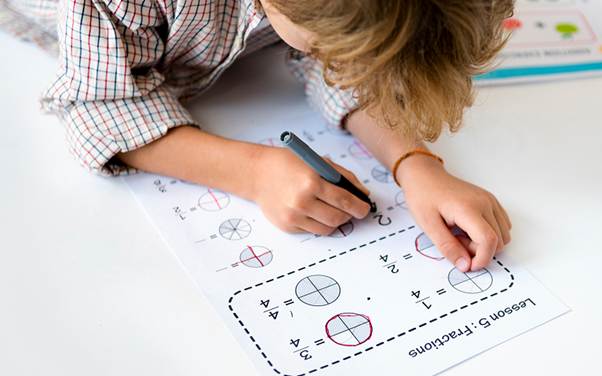
In Singapore’s education system, mathematical understanding develops earlier than in many other places. By the age of seven, many children are already engaging in algebraic thinking, even if they are not formally introduced to the word “algebra”. Through structured frameworks like the primary math tuition in Singapore, students learn to handle abstract relationships with symbols and numbers in a gradual way. This early exposure to algebra lays the groundwork for mathematical fluency in later years, particularly in upper primary and secondary levels.

Developing Symbolic Understanding

A key part of early algebra involves the gradual shift from concrete arithmetic to symbolic representation. This includes introducing blanks or boxes in equations (e.g., 7 + ___ = 12) and guiding students to figure out the missing values. In primary math tuition classes, these representations are stepping stones for understanding that numbers can be unknown, yet solvable. Over time, this develops into comfort with symbolic forms.

Introducing Patterns and Number Relationships

The foundation for algebra begins with pattern recognition. Young students are taught to identify repeating sequences, incremental changes, and symmetrical arrangements. Through activities involving shapes, number lines, and basic operations, they learn to make predictions and draw logical conclusions. These exercises, which feature prominently in math tuition in Singapore, sharpen their reasoning and prepare them to understand variables and equations later on. At this stage, students aren’t solving for x, but they’re building the cognitive skills needed for future algebraic learning, especially with the support of experienced tutors.

Applying the Bar Model Technique

Singapore’s use of the bar model method is a widely recognised strategy for teaching algebraic thinking at an early stage. Students draw rectangular bars to represent quantities and relationships, which helps them visualise the problem. This technique, taught in schools and reinforced in centres such as a math tuition in Bukit Timah, simplifies abstract problems into manageable visuals. It creates a bridge between arithmetic and algebra, guiding students to express relationships without needing formal algebraic notation.

Encouraging Logical Thinking Through Word Problems

Word problems are another major tool in introducing algebraic reasoning. Seven-year-olds are encouraged to extract relevant information, discard distractions, and identify what needs to be found. These questions guide them to form logical steps towards a solution. The real value lies in the process—not just in arriving at the answer, but in understanding why that path works. This emphasis on thinking over memorisation is heavily reinforced through structured programmes in math tuition in Singapore.

Reinforcing Concepts Through Consistent Practice

Early algebraic understanding doesn’t happen by chance. It requires repeated exposure and gradual layering of concepts. Practice materials used in primary math tuition in Singapore are designed to reinforce key patterns and introduce subtle variations. This keeps students engaged while deepening their grasp of foundational ideas. Consistent reinforcement builds confidence and fluency, allowing students to advance without fear or confusion when formal algebra is introduced in later years.

Creating an Environment That Supports Growth

Early success in mathematics depends heavily on the environment. Teachers and tutors must strike a balance between challenge and support. By fostering a mindset that values effort and reasoning over rote answers, educators help students develop persistence and a positive attitude toward problem-solving. Singapore’s tuition landscape plays a large role in this process. Many students are introduced to algebraic thinking through carefully crafted lessons.

Singapore’s young learners begin acquiring algebraic thinking skills as early as age seven through targeted teaching strategies that include pattern recognition, bar models, symbolic reasoning, and structured problem-solving. With guidance from primary math tuition and centres such as a math tuition in Bukit Timah, students are confident problem solvers when prepared for advanced concepts.

Building Mental Flexibility

Young learners are naturally curious and open to solving. Effective teaching taps into this by presenting multiple methods for finding the same solution. Whether through number bonds, drawing diagrams, or step-by-step logic, students learn to switch between techniques. This mental flexibility prepares them for the demands of secondary mathematics, where algebra requires abstract manipulation and efficient problem-solving. Centres like math tuitions in Bukit Timah tend to nurture this adaptability by exposing students to diverse question types.

For more information about math tuition in Singapore, visit Concept Math today.