Category

Education

Category

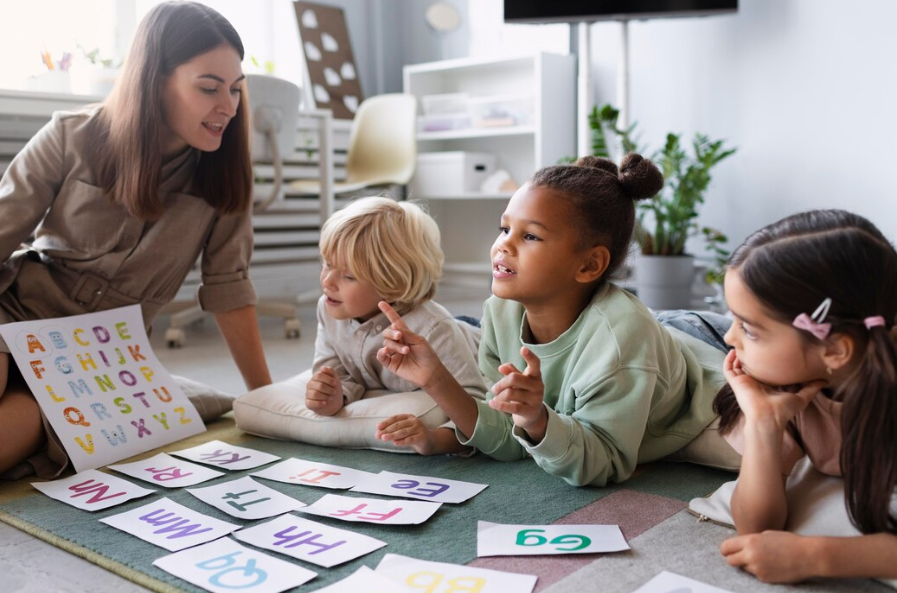
An early childhood learning center plays a pivotal role in shaping a child’s cognitive, social, and emotional development during their formative years. These centers provide structured environments where children can explore, learn, and grow under the guidance of trained professionals. By fostering curiosity and building foundational skills, early childhood learning centers set the stage for lifelong success.

In this article, we’ll explore the significance of early childhood learning centers, the benefits they offer, and what parents should consider when choosing the right center for their child.

What Is an Early Childhood Learning Center?

An early childhood learning center is a facility designed to support the growth and development of children from infancy to around five years old. These centers focus on nurturing various aspects of a child’s development through age-appropriate activities and structured learning experiences.

Early childhood education emphasizes holistic development, incorporating areas such as:

  • Cognitive skills
  • Emotional regulation
  • Social interaction
  • Physical coordination
  • Language and communication

Benefits of Early Childhood Learning Centers

Attending an early childhood learning center offers numerous advantages for young children and their families. Here are some key benefits:

1. Cognitive Development

Early learning centers provide children with stimulating environments where they can develop critical thinking, problem-solving, and decision-making skills. Activities like puzzles, storytelling, and hands-on experiments encourage curiosity and creativity.

2. Social Skills

Interacting with peers in a structured setting helps children develop social skills, such as sharing, cooperation, and conflict resolution. These experiences prepare them for future relationships in school and beyond.

3. Emotional Growth

By working with teachers and peers, children learn to identify and manage their emotions. Early exposure to group settings also builds self-confidence and resilience.

4. Language Development

Through activities like reading, singing, and conversation, children expand their vocabulary and improve communication skills. Early exposure to language-rich environments lays the foundation for literacy.

5. Preparation for Formal Education

Children who attend early childhood learning centers are often better prepared for kindergarten. They develop routines, learn to follow instructions, and adapt to structured schedules, easing the transition to primary school.

6. Fostering Independence

Early learning centers encourage children to explore and complete tasks on their own, building a sense of independence and self-reliance.

Key Features of an Effective Early Childhood Learning Center

Not all early childhood learning centers are created equal. When selecting a center for your child, consider the following features that contribute to a high-quality learning environment:

1. Qualified and Caring Staff

Teachers and caregivers should have proper training in early childhood education and demonstrate a genuine passion for working with young children. Look for centers where staff engage with children in a positive and nurturing manner.

2. Safe and Stimulating Environment

A well-designed center prioritizes safety while offering a variety of learning materials and spaces for exploration. Classrooms should be clean, organized, and equipped with age-appropriate toys, books, and tools.

3. Comprehensive Curriculum

An effective early childhood learning center offers a balanced curriculum that includes activities promoting cognitive, physical, social, and emotional development. The curriculum should be flexible enough to accommodate individual learning styles and needs.

4. Low Student-to-Teacher Ratio

Smaller class sizes allow teachers to provide more individualized attention, ensuring that each child’s unique needs are met.

5. Parent Involvement

Strong communication between the center and parents is essential. Look for programs that encourage parental involvement and provide regular updates on your child’s progress.

6. Play-Based Learning

Play is a critical component of early childhood education. Centers that incorporate play-based learning allow children to develop skills naturally while having fun.

What to Consider When Choosing an Early Childhood Learning Center

Selecting the right early childhood learning center is a significant decision that can impact your child’s development. Here are some factors to consider during your search:

1. Your Child’s Needs

  • Assess your child’s personality, interests, and learning style to find a center that aligns with their needs.
  • Consider whether they thrive in smaller or larger groups and whether they need additional support in specific areas.

2. Location and Accessibility

  • Choose a center that is conveniently located and fits your daily schedule.
  • Ensure that the center’s hours of operation align with your family’s needs.

3. Reputation and Reviews

  • Research reviews and testimonials from other parents to gain insights into the center’s quality.
  • Visit the center in person to observe how staff interact with children and assess the overall atmosphere.

4. Cost and Affordability

  • Determine your budget and explore centers that offer high-quality education within your financial means.
  • Inquire about available financial aid or payment plans, if needed.

5. Licensing and Accreditation

  • Verify that the center is licensed and adheres to local and state regulations.
  • Accreditation from recognized organizations indicates a commitment to high standards in early childhood education.

The Role of Parents in Early Learning

While early childhood learning centers provide structured education, parents play a vital role in supporting their child’s development. Here’s how you can complement the learning experience:

  1. Engage in Daily Conversations: Talk to your child about their day and encourage them to share their experiences and thoughts.
  2. Support Learning at Home: Reinforce skills learned at the center through activities like reading, puzzles, or creative play.
  3. Stay Involved: Participate in center events, parent-teacher meetings, and volunteer opportunities to stay connected to your child’s education.
  4. Create a Routine: Establish consistent routines for meals, sleep, and playtime to provide stability and structure.

An early childhood learning center is more than just a place for childcare—it’s a foundational step in a child’s educational journey. By fostering cognitive, social, and emotional development, these centers prepare children for future success both in school and in life.

When choosing a center, prioritize features like qualified staff, a safe environment, and a comprehensive curriculum that caters to your child’s unique needs. With the right early learning experience, your child can develop the confidence, skills, and curiosity to thrive in their formative years and beyond.

This article was written by an expert at Baby Fox Academy of Florida. Baby Fox Academy, preschool Sarasota FL, is your premier choice for high-quality early childhood education, blending structured learning with the magic of play. Baby Fox Academy is owned and operated by Laurie McCracken and Matt McCracken. Laurie has over 25 years of experience working in the early childhood field. Our play-based program supports each child’s development by balancing activities indoors and outdoors that develop fine motor skills, language, and creativity. Children develop important skills through engaging tools such as puzzles, drama play, and art. WatchMeGrow allows parents to check in at any time via “Trail Cams”, giving them peace of mind as their children play, learn and grow. Baby Fox Academy is a nurturing learning environment that will inspire your child to love learning for life.

Digital nomad life is exciting, adventurous, and full of new experiences. Modern-day travellers encounter various cultural differences as they travel between countries. Learning to navigate these differences is essential for digital nomads to thrive in their chosen lifestyle. The effective ways for digital nomads to prepare for cultural differences is to conduct thorough research before arriving at a new destination. This preparation can include:

  • Learning about local customs and etiquette
  • Studying basic phrases in the local language
  • Familiarizing yourself with cultural taboos and sensitivities
  • Researching local laws and regulations

By arming themselves with knowledge, digital nomads can avoid unintentional faux pas and show respect for the local culture from day one.

Embrace an open mindset

Adopting an open and flexible mindset is crucial for digital nomads facing cultural differences. This approach involves:

  • Suspending judgment and avoiding comparisons to your home culture
  • Being curious and willing to learn from new experiences
  • Accepting that there may be multiple valid ways of doing things
  • Recognizing that discomfort is a natural part of cultural adjustment

With an open mindset, digital nomads can turn potentially challenging situations into opportunities for personal growth and cultural understanding.

Develop cultural intelligence

 Digital nomads can develop their CQ by:

  • Observing and imitating local behaviours
  • Practicing active listening and non-verbal communication
  • Seeking out cultural mentors or local friends
  • Reflecting on their experiences and adjusting their approach accordingly

As digital nomads enhance their cultural intelligence, they become more adept at navigating diverse environments and building meaningful connections with people from different backgrounds.

Create a support network

Building a support network can be invaluable for digital nomads dealing with cultural differences. This network may include:

  • Other digital nomads who can offer advice and shared experiences
  • Local expatriates who understand both the host culture and the challenges of living abroad
  • Online communities and forums focused on digital nomad life
  • Professional networks in your industry that span different cultures

A strong support network can provide emotional support, practical advice, and a sense of belonging as digital nomads navigate unfamiliar cultural landscapes.

Maintain a connection to your own culture

While immersing themselves in new cultures, digital nomads need to maintain a connection to their own cultural identity. This balance can be achieved by:

  • Celebrating your cultural holidays and traditions
  • Engaging in familiar activities or hobbies
  • Sharing aspects of your culture with locals and other travellers

Maintaining this cultural anchor can provide a sense of stability and help digital nomads appreciate both their own culture and the new ones they encounter.

Leverage technology

Technology can be a powerful tool for digital nomads navigating cultural differences. Useful applications include:

  • Language translation apps for real-time communication assistance
  • Cultural etiquette guides and resources available on smartphones
  • Virtual private networks (VPNs) to access familiar content and maintain online privacy
  • Video calling platforms to stay connected with support networks

By leveraging technology, digital nomads can bridge cultural gaps and stay connected to their support systems while on the move.

Digital nomads have unparalleled opportunities for personal and professional growth. Nomads can transform potential challenges into enriching experiences by approaching cultural differences with curiosity, respect, and adaptability. A digital nomad’s journey is successful and fulfilling when using these strategies. As more professionals choose the digital nomad path, the skills developed in navigating cultural differences become invaluable assets. These experiences shape digital nomads into global citizens who can thrive in diverse environments and contribute to cross-cultural understanding in our increasingly connected world.

As you prepare to enter Secondary 3, you may find yourself captivated by the prospect of taking on Additional Mathematics, or A-Math, for your O-Level. The question then arises: How to prepare for the end-of-year streaming exams in Sec 2? Is A-Math worth taking in Secondary 3 as one of the subject combination? 

The leap from Secondary 2 Math to Secondary 3 A-Math seems like moving from basic arithmetic to simplifying complex unknowns. Secondary 2 Math lays a foundation, especially in Algebra, that will help you conquer more advanced mathematical landscapes in A-Math. In Secondary 2, you will be formally introduced to basic topics like linear equations, inequalities, and quadratic expressions. Mastering these foundational topics is key to smoothly tackling more advanced concepts in A-Math, such as functions and inequalities.

A-Math (Syllabus 4094) is structured around these three primary topics:

Algebra
1.1 Quadratic Functions
1.2 Equalities and Inequalities
1.3 Surds
1.4 Polynomials and Partial Fractions
1.5 Binomial Expansions
1.6 Exponential and Logarithmic Functions
Geometry and Trigonometry
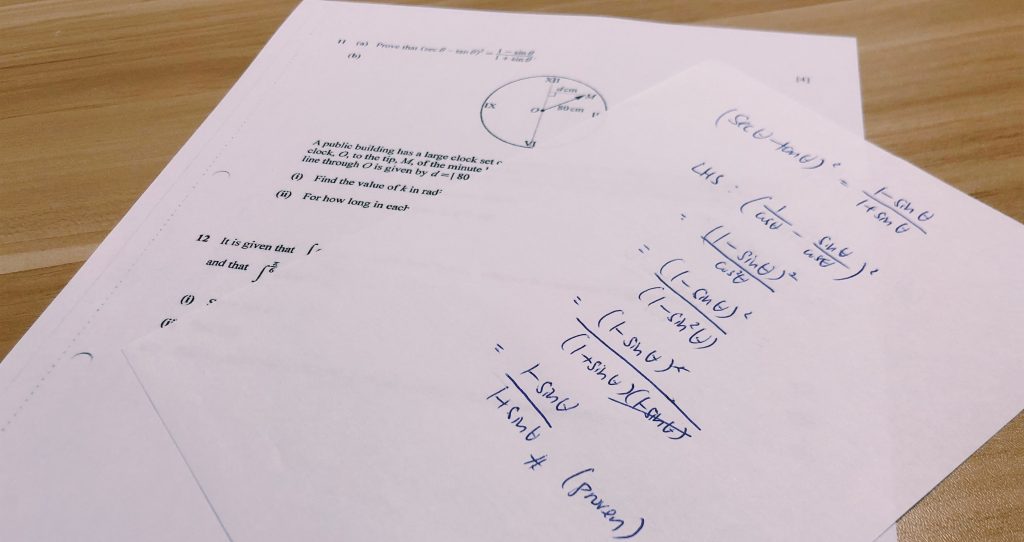
2.1 Trigonometric Functions, Identities and Equations
2.2 Coordinate Geometry in Two Dimensions
2.3 Proofs in Plane Geometry
Calculus
3.1 Differentiation and Integration

What are the benefits of taking A-Math?

  1. Enhanced Problem-Solving Skills

A-Math sharpens logical thinking and analytical problem-solving abilities, helping students tackle more complex, real-world problems. This pushes students to approach problems methodically, critically analyse information, and use logical reasoning to arrive at solutions – skills that are not only useful in higher education but are also crucial in various professional fields and daily life.

  1. Proficiency that Distinguishes You

A key advantage of studying A-Math is the level of proficiency it develops. This subject fosters a thorough grasp of fundamental mathematical concepts and their real-world applications. Consequently, it sharpens your mathematical skills, distinguishing you from your peers. As you progressively master A-Math, you’ll not only comprehend complex mathematical theories but also gain the confidence to solve intricate problems effectively.

Why A-Mathematics Can Affect Your Choice of Junior College?

For students who intend to take up H1 or H2 Mathematics in Junior College, good fundamentals in Sec 3 A-Math is vital. The syllabus for H2 Mathematics covers extensive concepts of calculus, trigonometry, and more advanced algebra—on top of matrices and vectors. All these were built what you had learned during your Sec 3 A-Math time, and included skills that were manipulation-based around dealing with equations manipulation and algebraic expressions. 

H1 Math builds upon the core concepts from Sec 3 A-Math but at a less demanding pace. In addition, you’ll be better positioned to grasp new things in H1 Math, thereby providing you with the window of focusing more on time investment on other challenging JC subjects. 

Ultimately, Sec 3 A-Math will lay the foundation for you in JC Math, whether it is for H1 or H2. 

Scared stiff by the transition into Sec 3 A-Mathematics? 

At Indigo, lessons are strategically designed to align with the unique requirements of each school. We offer a range of school-specific tracks to cater to a differentiated Express syllabus, ensuring a synchronised learning experience that corresponds with students’ respective curricula and pace. Sign up for a Mathematics trial class at Indigo to learn more about Indigo’s Express Math Programme and unlock your full mathematical potential!

Choosing the right educational environment for your children is one of the most significant decisions you will make as a parent. Christian private prep schools offer a unique blend of academic excellence and spiritual growth, providing students with the tools they need to succeed both in life and in their faith. By integrating rigorous academics with a foundation in Christian values, these schools create a nurturing atmosphere that encourages character development alongside intellectual growth.

Academic Excellence

Christian private prep schools are renowned for their commitment to academic excellence. With smaller class sizes, students receive more personalized attention from their teachers, allowing for tailored instruction that meets each student’s unique needs. The curriculum is designed to challenge students across various subjects while fostering critical thinking, creativity, and a love for learning. By maintaining high standards, these schools prepare students for the demands of college and beyond, ensuring they are ready to excel in a competitive world.

Building a Strong Moral Foundation

One of the core advantages of Christian private prep schools is their focus on developing strong moral character. The integration of Christian teachings and values into the everyday curriculum provides students with a solid ethical framework on which to build their lives. Students learn principles such as honesty, integrity, kindness, and compassion, which help them navigate the complex world with a strong sense of right and wrong. This moral foundation not only guides their personal decisions but also enhances their relationships with others.

Community and Support

The sense of community fostered within Christian private prep schools is unparalleled. Students, parents, faculty, and staff work together to create a supportive environment that feels like a family. Whether through shared worship, service projects, or extracurricular activities, the school community often extends beyond the classroom walls. This support network encourages students to achieve their potential while providing a safe space for them to explore their interests and passions. The friendships and connections made in this environment often last a lifetime, providing a solid social foundation for the future.

Spiritual Integration

At the heart of Christian private prep schools is their mission to nurture students’ faith. Daily prayer, Bible study, and worship are interwoven into the school day, encouraging students to grow spiritually while deepening their relationship with God. This spiritual integration is not just an add-on but a fundamental part of the educational experience, allowing students to explore their faith in a supportive and open environment. Exposure to diverse religious perspectives and experiences enriches students’ understanding and respect for different beliefs and practices.

Preparing for the Future

The holistic education provided by a Christian private prep school extends beyond academic and spiritual growth. Schools place a strong emphasis on developing essential life skills such as leadership, communication, and problem-solving, preparing students to navigate the world with confidence and competence. By offering a wide range of extracurricular activities, from sports to arts, students are encouraged to pursue their passions and develop talents, fostering well-rounded individuals who are ready to contribute positively to society.

Conclusion

Choosing to send your children to a Christian private prep school can be one of the most beneficial decisions you make for their future. These institutions offer a unique combination of academic rigor and spiritual enrichment, nurturing both the mind and the soul. By fostering strong community ties and building a moral foundation, Christian private prep schools prepare students for success in every aspect of life. Through this comprehensive educational approach, children are equipped not only to excel academically but to become individuals of character and faith, ready to impact the world for the better.

Top Fake Certificates, Transcripts, and Diplomas

Looking for high-quality fake degrees, transcripts, diplomas, or GED certificates? You’ve come to the right place! Our products come with a quality guarantee, free samples, and outstanding craftsmanship from the best diploma manufacturers in the industry. Order now and receive customized fake certificates featuring your desired institute name. Our experts will create a handcrafted certification tailored just for you.

Certificates and GED Transcripts

We offer a wide variety of authentic-looking degree and certificate options that cover every state in the country. Each imitation GED is expertly crafted to look incredibly realistic, complete with unique details such as names, dates, and other relevant information. Plus, every GED certificate can feature a golden seal for added authenticity. Our transcripts are printed on secure paper and include standard GED programs.

Fake Diplomas and Transcripts from Colleges and Universities

Get a fake undergraduate degree from the leading provider for any educational institution. We offer various options, including records and imitation certificates. When you purchase both documents together, you can enjoy a 20% discount! We include essential information such as course names and graduation dates, and our team carefully selects the best materials for diplomas, considering seal options and other details. Our accurate documents cover all required classes for your chosen field of study, and you can even add creative courses by selecting a unique training option. Transcripts and novelty certificates are available at Diploma Prints, offering affordable, high-quality printing with quick turnaround times. As a market leader, we provide exceptional fake diplomas and certificates to meet your needs, making the online purchasing process easy and straightforward.

Transcripts and Duplicate High School Certificates

We offer the best selections for fake high school diplomas available anywhere. Our collection includes a wide range of customizable high school transcript forms, allowing you to easily add names and dates. We cover all fifty states and offer golden seal options for extra authenticity. Don’t miss this opportunity to quickly obtain realistic-looking fake diploma and documents. We also provide customized documents featuring graduation degrees, all expertly produced on genuine parchment paper.

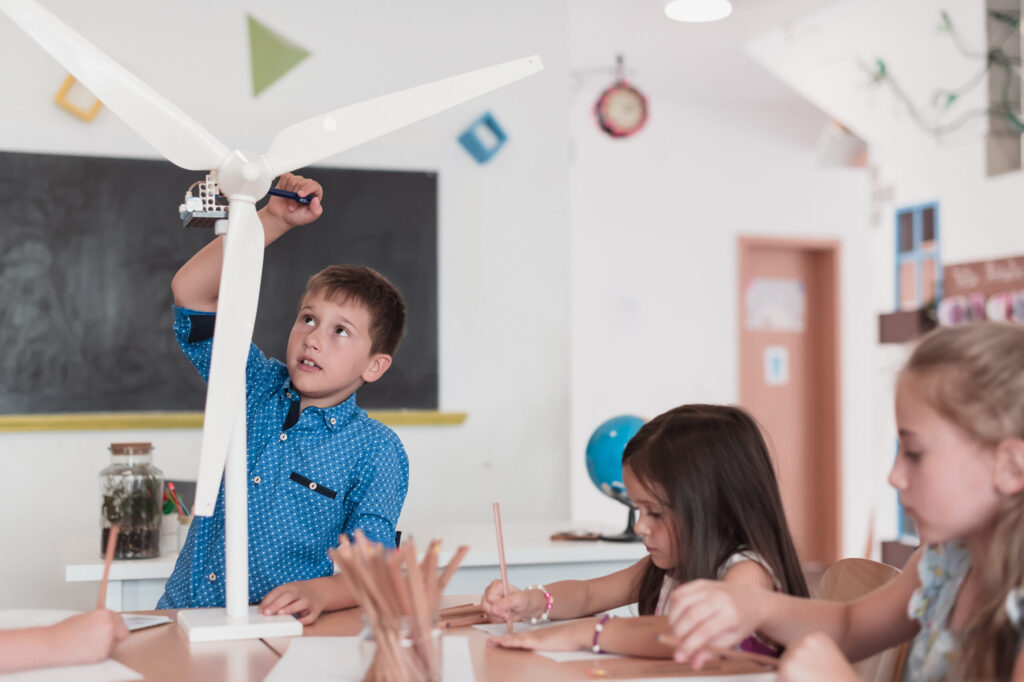
The world is turning to cleaner energy sources, and solar power is leading the charge. As more people and businesses adopt solar technology, the need for skilled professionals in this field is growing rapidly. 

If you’re interested in joining this exciting industry, getting certified in solar energy can give your career a significant boost. Let’s explore how solar energy courses and certifications can open doors to new opportunities and help you succeed in the renewable energy sector.

Why Solar Energy Certifications Matter

Solar energy certifications are special training programs that teach you the ins and outs of working with solar power. These online technology courses cover everything from how solar panels work to how to install and maintain them. By completing these programs, you show employers that you have the knowledge and skills needed to excel in the solar industry.

How Solar Energy Certifications Can Boost Your Career

Expanding Your Knowledge and Skills

When you take solar energy courses, you learn about more than just solar panels. You gain a deep understanding of how solar energy works, the science behind it and how it can be used in different settings. This knowledge is valuable not only in the solar industry but also in related fields like construction, architecture and energy management.

For example, you might learn about:

  • How solar cells convert sunlight into electricity
  • Different types of solar panel systems
  • How to install and design solar power systems
  • Safety practices for working with solar equipment
  • Laws and regulations related to solar energy

Opening Doors to New Job Opportunities

One of the biggest benefits of getting certified in solar energy is the boost it gives to your job prospects. As more people and businesses switch to solar power, there’s a growing need for professionals who know how to work with this technology. With a certification, you’ll be well-positioned to take advantage of these opportunities.

Some job roles you might qualify for include:

  • Solar panel installer
  • Solar sales representative
  • Solar project manager
  • Energy efficiency consultant

Providing Better Service to Clients

When you’re certified in solar energy, you can offer better service to your clients. You’ll have the knowledge to answer their questions, design the best solar solutions for their needs, and ensure that installations are done correctly. This leads to happier customers, which is good for business and can help you build a strong reputation in the industry.

Staying Ahead in a Growing Field

The solar energy industry is constantly evolving. By getting certified and staying up-to-date with your training, you can stay ahead of these changes. This makes you more valuable to employers and helps ensure that your skills remain relevant as the industry grows and changes.

Conclusion

Solar energy courses and certifications can give your career a significant boost in the renewable energy sector. They provide you with valuable knowledge, open up new job opportunities, potentially increase your earning power, and help you provide better service to clients. 

As the world continues to embrace clean energy, having these certifications can set you up for a bright and successful future in this growing field.

In the realm of early childhood education, the terms “Nursery 1” and “Nursery 2” often come up, particularly in Singapore and other countries with similar education systems. These crucial stages form the foundation of a child’s formal learning journey, setting the stage for future academic and personal development. This comprehensive guide delves into the world of Nursery 1 and Nursery 2, exploring what they entail, their differences, key information for parents, and how to select the best school for your child’s early education.

Understanding Nursery 1 and Nursery 2

Nursery 1 and Nursery 2 are early childhood education levels typically designed for children aged 2 to 4 years old. These stages precede formal schooling and are part of the preschool education system. Let’s break down each level:

Nursery 1

Age Group:

Generally for children aged 2 to 3 years

Focus:

Introduction to structured learning environments

Key Objectives:

Basic socialization, language development, and motor skills

Nursery 2

Age Group:

Usually for children aged 3 to 4 years

Focus:

More structured learning with academic foundations

Key Objectives:

Enhanced social skills, pre-literacy, and pre-numeracy concepts

Both Nursery 1 and Nursery 2 play crucial roles in a child’s early development, providing a bridge between home care and formal education.

Key Differences Between Nursery 1 and Nursery 2

While both stages are part of early childhood education, there are significant differences in curriculum, teaching approaches, and developmental expectations:

1. Curriculum Complexity

Nursery 1: Focus on basic concepts, simple activities, and routines

Nursery 2: Introduction of more complex ideas, structured activities, and early academic concepts

2. Social Development

Nursery 1: Emphasis on basic social skills like sharing and turn-taking

Nursery 2: More advanced social interactions, cooperative play, and group activities

3. Language Development

Nursery 1: Building vocabulary, simple sentence structures

Nursery 2: Expanded vocabulary, more complex language use, early reading skills

4. Motor Skills

Nursery 1: Focus on gross motor skills and basic fine motor activities

Nursery 2: More refined fine motor skills, introduction to writing and drawing

5. Cognitive Development

Nursery 1: Basic problem-solving, shape recognition, and sorting

Nursery 2: More advanced problem-solving, early math concepts, and logical thinking

6. Independence

Nursery 1: Developing basic self-help skills

Nursery 2: Greater emphasis on independence in daily tasks and learning

7. Creative Expression

Nursery 1: Free exploration of art materials and music

Nursery 2: More structured art projects and musical activities

8. Attention Span

Nursery 1: Shorter, more frequent activity changes

Nursery 2: Longer periods of focused activities

Essential Information About Nursery 1 and Nursery 2

Parents considering or preparing for their child’s entry into Nursery 1 or Nursery 2 should be aware of several key points:

1. Developmental Appropriateness

Both stages are designed to meet the developmental needs of specific age groups

Activities and expectations are tailored to children’s cognitive, social, and physical abilities

2. Play-Based Learning

Both Nursery 1 and 2 typically employ play-based learning approaches

Play is used as a vehicle for introducing concepts and developing skills

3. Holistic Development

Focus is not solely on academic skills but on overall child development

Emotional, social, physical, and cognitive aspects are all addressed

4. Preparation for Formal Schooling

Nursery 2, in particular, begins to prepare children for the transition to formal education

Introduction of routines, structured learning times, and basic academic concepts

5. Individualized Approach

Recognition that children develop at different rates

Personalized attention to meet individual needs and learning styles

6. Parental Involvement

Both stages often encourage significant parental involvement

Regular communication between teachers and parents is typical

7. Assessment Methods

Focus on observational assessment rather than formal testing

Regular progress reports and parent-teacher conferences

8. Multilingual Exposure

In many settings, particularly in Singapore, children may be exposed to multiple languages

Bilingual or multilingual programs are common

9. Technology Integration

Increasing use of age-appropriate technology in learning activities

Balance between digital and traditional learning methods

10. Health and Safety Protocols

Strict health and safety measures, especially important in early childhood settings

Regular health checks and cleanliness standards

Selecting the Best School for Nursery 1 and Nursery 2

Choosing the right school for your child’s Nursery 1 and Nursery 2 education is a crucial decision. Here are key factors to consider:

1. Educational Philosophy

Research the school’s teaching approach (e.g., Montessori, Reggio Emilia, play-based)

Ensure alignment with your family’s values and your child’s learning style

2. Curriculum

Examine the curriculum for age-appropriateness and comprehensiveness

Look for a balance between academic foundations and holistic development

3. Teacher Qualifications

Inquire about teachers’ qualifications and experience in early childhood education

Consider the teacher-to-student ratio

4. Learning Environment

Visit the school to assess the physical environment

Look for clean, safe, and stimulating classrooms and play areas

5. Reputation and Accreditation

Check the school’s reputation through parent reviews and community feedback

Verify accreditation and licensing by relevant educational authorities

6. Location and Schedule

Consider the school’s proximity to your home or workplace

Evaluate if the school’s hours align with your family’s schedule

7. Language of Instruction

Decide on the preferred language(s) of instruction

For bilingual programs, understand the balance between languages

8. Extracurricular Activities

Look for schools offering a range of extracurricular activities

Consider how these activities support overall development

9. Parental Involvement Opportunities

Understand how the school involves parents in their child’s education

Look for regular communication channels and parent-teacher interactions

10. Transition Support

Inquire about how the school supports transitions between Nursery 1 and 2

Consider the school’s approach to preparing children for formal schooling

Conclusion: Laying the Foundation for Lifelong Learning

Nursery 1 and Nursery 2 represent crucial stages in a child’s early education journey. These formative years set the stage for future learning, social development, and overall growth. By understanding the unique aspects of each stage and carefully selecting the right educational environment, parents can provide their children with a strong foundation for lifelong learning.

Remember that each child is unique, and what works best for one may not be ideal for another. Take the time to observe your child, consider their individual needs and personality, and use this information to guide your decision-making process. Whether you choose a traditional preschool, a Montessori environment, or another educational approach, the key is to find a nurturing, stimulating setting that encourages your child’s natural curiosity and love for learning.

Ultimately, the Nursery 1 and Nursery 2 years are not just about academic preparation but about fostering a positive attitude towards school and learning. By choosing the right environment and staying involved in your child’s early education, you’re setting them on a path to success, confidence, and a lifelong love of learning.