
Tag

singapore education

Browsing

Every parent wonders when their child is ready to take on tougher lessons. Chinese learning follows a steady rhythm, and once the basics turn into habits, it may be time for a challenge. A child who reads simple texts with ease or expresses ideas confidently could be ready for advanced Chinese classes. The key is to notice how naturally they use the language in everyday life. Enrolling them in Chinese classes in Singapore gives them the structure to deepen that growing fluency.

Confidence in Communication

When children start speaking Chinese with ease, it shows they are comfortable using the language beyond the classroom. They no longer hesitate before forming sentences and can express emotions or opinions clearly. This confidence is one of the strongest indicators that they are prepared for higher-level instruction. In Chinese classes in Singapore, teachers look for signs of self-expression and spontaneous speech before moving students to advanced programmes.

Students who enjoy reading stories aloud or chatting about their favourite topics in Chinese show readiness for more complex lessons. Their growing vocabulary and comfort with tone usage indicate that the foundation is solid. Confidence fuels progress, and advanced lessons help students refine pronunciation, expand vocabulary, and explore cultural nuances.

Strong Reading and Writing Skills

Reading is where many learners show true growth. When children start recognising complex characters or understanding short articles without help, they show readiness for advanced study. Writing follows the same pattern. If your child begins to form structured paragraphs or use idioms appropriately, it reflects mastery of core grammar and creativity in expression.

In a tuition centre in Singapore, tutors often assess reading and writing progress through small tasks like essay writing or comprehension exercises. These evaluations show whether a child can handle a wider vocabulary and deeper sentence structures. The ability to connect ideas smoothly is an important milestone that suggests they can handle more demanding materials and longer passages.

Curiosity About Language and Culture

A curious mind is a strong learner. When children start asking about meanings behind phrases, cultural references, or Chinese proverbs, it signals they are engaging at a higher level. Curiosity shows that they are not only memorising words but also connecting them to real-world context. This marks a clear step toward advanced fluency.

Cultural lessons alongside language instruction are often introduced in Chinese classes in Singapore. Children learn about traditions, stories, and idioms that carry meaning beyond vocabulary. When students begin showing interest in these aspects, it reflects maturity and readiness for more in-depth lessons. Advanced classes nurture this curiosity, allowing children to explore Chinese literature and history in fun, engaging ways.

Ease with Grammar and Tone

Chinese grammar may seem simple at first, but fluency requires accuracy and rhythm. Children who can use different sentence patterns without confusion show strong grammatical understanding. They know how to form questions, describe events, and express opinions correctly. This level of comfort suggests they are ready to expand their writing style and conversational depth.

In a tuition centre in Singapore, tutors help refine tone accuracy through repeated reading and speaking drills. When students maintain correct tones across different phrases and contexts, they demonstrate strong command of pronunciation. These skills form the backbone of advanced learning, where precision and fluency go hand in hand.

Independent Study Habits

Advanced classes demand consistency and focus. Children who take initiative with homework, review past lessons on their own, or practise vocabulary outside class show discipline. Independence is an important skill that ensures they can handle more complex material. It reflects readiness to learn with minimal prompting and greater responsibility.

Tutors encourage such habits through guided practice and regular feedback. This approach teaches students to monitor their own progress and seek clarification when needed at a tuition centre in Singapore. By building independence early, advanced learners become more confident in managing their own study pace.

Transitioning to Advanced Classes

The move to advanced Chinese classes should feel natural, not forced. When the basics feel too easy and lessons no longer challenge your child, that is the right moment to progress. Advanced classes introduce creative writing, longer comprehension passages, and deeper discussion topics. They also encourage analytical thinking through literature, helping students appreciate Chinese as a tool for communication and culture.

Chinese classes in Singapore cater to varying proficiency levels, ensuring each student learns at a comfortable yet challenging pace. With experienced tutors, lessons are adjusted to support growth while maintaining enjoyment. The goal is to strengthen existing skills while building confidence for new ones.

Helping Your Child Thrive

As parents, observing your child’s enthusiasm and progress is the best indicator of readiness. Celebrate small milestones and provide consistent encouragement. With proper guidance, students who enjoy learning will continue to improve naturally. A supportive environment, structured curriculum, and patient tutoring make the transition smooth and rewarding.

Children who move into advanced Chinese classes gain more than language skill; they gain a deeper appreciation for communication and cultural connection. Each new lesson builds confidence and opens doors to lifelong fluency.

Contact LingoAce to help your child take the next confident step toward mastering advanced Chinese with engaging lessons and expert guidance.


Physics can feel like a puzzle filled with endless formulas, theories, and strange symbols. Many students start off curious, only to lose confidence midway through the term. That’s where physics tuition in Singapore becomes a real game-changer. It gives structure, strategy, and clarity to a subject that might otherwise feel overwhelming. Here’s how to approach it with a clear plan that gets results.

1. See Where You Stand

Before any improvement begins, you need a clear picture of your current understanding. Gather your past papers, topic tests, and school feedback. Identify patterns, perhaps you grasp motion but stumble on electricity.

Once that’s finished, ask your tutor about your weak areas. A good physics tuition programme in Singapore should include diagnostic reviews or short pre-tests to pinpoint gaps early. Treat this as a starting line, not a judgment. From there, everything you learn will feel more directed and less like guesswork.

Tip: Keep a simple progress chart at home. Seeing your improvements week by week can be surprisingly motivating.

2. Build a Solid Foundation Before Diving Deep

Many students jump straight into complex problems without grasping the core ideas. Physics, however, rewards patience. Spend time strengthening your conceptual base before tackling advanced chapters.

For example, before solving kinematics questions, make sure you truly understand the difference between distance and displacement. It sounds simple, but these basics often decide how you approach trickier questions later.

This is especially crucial if you’re in sec 3 physics tuition, where lessons shift from memorisation to application. Concepts from these sessions will form the backbone of your O Level topics in the following year. Revisit your notes weekly and use simple analogies to explain each idea aloud; it helps lock them in your memory.

Mini Exercise: Pick one concept each week, such as Newton’s laws, and try explaining it in everyday terms (like how seatbelts relate to inertia).

3. Practise Smart, Not Hard

Solving ten papers without reflection does little good. The goal is to practise with intention. After each set of questions, review not only your mistakes but also why they happened. Did you misunderstand the question, or forget a key formula?

Your sec 3 physics tuition sessions from a physics tuition like Kungfu Physics can guide you through exam-style thinking, showing how markers assess answers. Tutors often highlight keywords that examiners look for, helping you refine your phrasing.

Focus your efforts on topics that carry heavier weightage in exams: forces, light, and thermal physics usually take up significant portions. Work on these until you can handle variations with ease.

Remember: The right method beats random effort every time.

4. Simulate Exam Conditions Early

Once your concepts feel solid, it’s time to test your focus under real conditions. Set up a quiet space, time yourself, and attempt a full paper without breaks. These mock tests help reveal weaknesses in time management and mental stamina.

During your physics tuition in Singapore, ask your tutor to mark these mock papers and discuss the results. This feedback loop is invaluable; it teaches you how to stay calm during the actual O Levels. Practise at least one paper every two weeks, and track your scores for consistent progress.

Pro Tip: Try alternating between structured and open-ended questions to develop flexibility. It’s a skill examiners love to see.

5. Maintain Balance and Routine

No amount of study helps if you’re exhausted or anxious. Set a steady schedule that includes study breaks, movement, and light entertainment. Your brain consolidates knowledge better when it’s not overwhelmed.

Tutors offering physics tuition in Singapore often notice that students who rest properly perform more confidently. Revisit earlier topics now and then instead of cramming near exams. It keeps old information fresh and prevents last-minute panic.

End each week with a short reflection: What worked, what didn’t, and what needs tweaking? Small adjustments build steady progress.

Conclusion

Succeeding in physics isn’t about memorising every formula, but building understanding step by step. Start by knowing your weaknesses, master the foundations, practise purposefully, and simulate real exams early. Keep your routine balanced, and progress will follow naturally. With consistent effort, physics tuition in Singapore can turn the subject from intimidating to achievable.

Contact Kungfu Physics to start structured sessions designed to help students master concepts confidently and prepare effectively for their exams.

For many students in Singapore, A-Level Chemistry is one of the most challenging subjects in the JC curriculum. While the syllabus covers a broad range of topics, one area consistently stands out as particularly demanding: Organic Chemistry. The complexity of reaction mechanisms, functional group transformations, and the sheer volume of content can overwhelm even high-performing students. This is why finding good chemistry tuition in Singapore can make a significant difference in mastering such content-heavy topics.

Understanding Why Organic Chemistry Is So Tough

Unlike topics such as Atomic Structure or Thermodynamics, Organic Chemistry requires a strong memory, logical thinking, and visualisation skills. It’s not just about understanding concepts but also being able to apply them to novel reaction pathways. Students must recognise patterns, predict outcomes, and justify their answers with mechanisms that often span multiple steps.

This subject also includes a vast array of reactions, each with specific reagents, conditions, and exceptions. Furthermore, the examination questions are designed to test the application of knowledge in unfamiliar contexts. With such demands, it’s no surprise that Organic Chemistry is often viewed as the most difficult topic in A-level chemistry tuition.

The Importance of a Structured Learning Approach

To effectively learn Organic Chemistry, students need a structured, incremental approach. Jumping into exam-style questions without mastering the basics often leads to confusion and poor results. A systematic breakdown of content—starting with functional group identification, followed by reaction mechanisms, synthesis strategies, and finally, retrosynthesis—enables a more coherent understanding.

This is where A-level chemistry tuition plays a crucial role. A good tutor doesn’t just teach content—they guide students through a logical progression that builds both confidence and competence. With the right scaffolding, students learn to dissect questions, draw mechanisms correctly, and evaluate plausible synthetic routes, all of which are essential for exam success.

Why Personalised Guidance Makes a Difference

One of the main benefits of tuition is the opportunity for personalised feedback. In school settings, large class sizes may limit the level of attention a teacher can give to each student. In contrast, smaller group sessions or one-on-one lessons in good chemistry tuition in Singapore allow for detailed feedback and clarification of misconceptions.

Students also benefit from targeted practice questions and curated summaries that focus specifically on their weak areas. This tailored approach ensures time is spent efficiently, especially in the months leading up to major exams. Additionally, being able to ask questions in a safe, non-judgmental space can dramatically improve a student’s engagement and motivation.

Integrating Practice With Strategy

A significant mistake many students make is focusing solely on memorisation. While knowing reagents and reaction types is important, it’s equally crucial to develop exam strategies. These include identifying commonly tested reaction pathways, understanding mark allocation, and practising time management.

Quality A-level chemistry tuition introduces these elements early in the learning journey. Tutors teach students how to annotate question stems, look out for key functional groups, and map reactions visually. Many also provide mock exams under timed conditions, helping students simulate real-life scenarios and reduce anxiety on the actual examination day.

Sustaining Progress Through Review and Reflection

As students progress through the syllabus, it’s easy to forget earlier topics if they’re not regularly reviewed. This is especially problematic in Organic Chemistry, where earlier concepts like isomerism and nucleophilic substitution reappear in synthesis questions. To sustain long-term retention, periodic revision is essential.

Before the final examination period, students often return to their study materials to reinforce these links. At this stage, the structured notes and worked solutions from A-level chemistry tuition become invaluable resources. Tutors also help students reflect on past mistakes, refining their understanding and helping them avoid similar errors in the future.

Conclusion

Mastering Organic Chemistry requires more than just hard work—it demands a strategic, guided approach that combines content mastery, applied practice, and ongoing feedback. For students in Singapore, the support of good chemistry tuition in Singapore can turn what feels like an insurmountable challenge into a manageable and even rewarding experience. If you or your child is struggling with A-level chemistry, contact Mr Khemistry today and take the first step towards academic success.

In Singapore’s education system, mathematical understanding develops earlier than in many other places. By the age of seven, many children are already engaging in algebraic thinking, even if they are not formally introduced to the word “algebra”. Through structured frameworks like the primary math tuition in Singapore, students learn to handle abstract relationships with symbols and numbers in a gradual way. This early exposure to algebra lays the groundwork for mathematical fluency in later years, particularly in upper primary and secondary levels.

Developing Symbolic Understanding

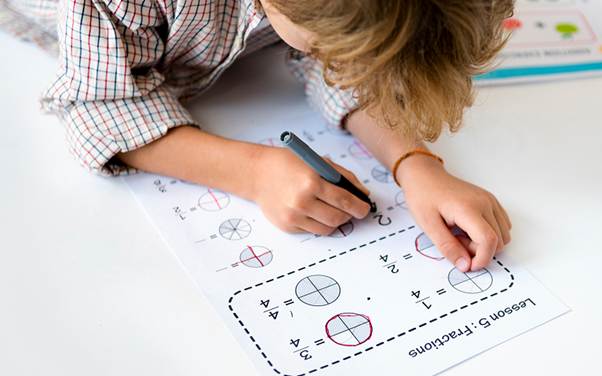
A key part of early algebra involves the gradual shift from concrete arithmetic to symbolic representation. This includes introducing blanks or boxes in equations (e.g., 7 + ___ = 12) and guiding students to figure out the missing values. In primary math tuition classes, these representations are stepping stones for understanding that numbers can be unknown, yet solvable. Over time, this develops into comfort with symbolic forms.

Introducing Patterns and Number Relationships

The foundation for algebra begins with pattern recognition. Young students are taught to identify repeating sequences, incremental changes, and symmetrical arrangements. Through activities involving shapes, number lines, and basic operations, they learn to make predictions and draw logical conclusions. These exercises, which feature prominently in math tuition in Singapore, sharpen their reasoning and prepare them to understand variables and equations later on. At this stage, students aren’t solving for x, but they’re building the cognitive skills needed for future algebraic learning, especially with the support of experienced tutors.

Applying the Bar Model Technique

Singapore’s use of the bar model method is a widely recognised strategy for teaching algebraic thinking at an early stage. Students draw rectangular bars to represent quantities and relationships, which helps them visualise the problem. This technique, taught in schools and reinforced in centres such as a math tuition in Bukit Timah, simplifies abstract problems into manageable visuals. It creates a bridge between arithmetic and algebra, guiding students to express relationships without needing formal algebraic notation.

Encouraging Logical Thinking Through Word Problems

Word problems are another major tool in introducing algebraic reasoning. Seven-year-olds are encouraged to extract relevant information, discard distractions, and identify what needs to be found. These questions guide them to form logical steps towards a solution. The real value lies in the process—not just in arriving at the answer, but in understanding why that path works. This emphasis on thinking over memorisation is heavily reinforced through structured programmes in math tuition in Singapore.

Reinforcing Concepts Through Consistent Practice

Early algebraic understanding doesn’t happen by chance. It requires repeated exposure and gradual layering of concepts. Practice materials used in primary math tuition in Singapore are designed to reinforce key patterns and introduce subtle variations. This keeps students engaged while deepening their grasp of foundational ideas. Consistent reinforcement builds confidence and fluency, allowing students to advance without fear or confusion when formal algebra is introduced in later years.

Creating an Environment That Supports Growth

Early success in mathematics depends heavily on the environment. Teachers and tutors must strike a balance between challenge and support. By fostering a mindset that values effort and reasoning over rote answers, educators help students develop persistence and a positive attitude toward problem-solving. Singapore’s tuition landscape plays a large role in this process. Many students are introduced to algebraic thinking through carefully crafted lessons.

Singapore’s young learners begin acquiring algebraic thinking skills as early as age seven through targeted teaching strategies that include pattern recognition, bar models, symbolic reasoning, and structured problem-solving. With guidance from primary math tuition and centres such as a math tuition in Bukit Timah, students are confident problem solvers when prepared for advanced concepts.

Building Mental Flexibility

Young learners are naturally curious and open to solving. Effective teaching taps into this by presenting multiple methods for finding the same solution. Whether through number bonds, drawing diagrams, or step-by-step logic, students learn to switch between techniques. This mental flexibility prepares them for the demands of secondary mathematics, where algebra requires abstract manipulation and efficient problem-solving. Centres like math tuitions in Bukit Timah tend to nurture this adaptability by exposing students to diverse question types.

For more information about math tuition in Singapore, visit Concept Math today.